
Bangkok neighbourhoods for café work: where would you spend an ordinary week?
A task-first comparison of Ari, Silom, Sathorn, Sukhumvit, On Nut, Rama 9, Huai Khwang, the riverside and more for café-based remote work.
Quick answer
Look for a neighbourhood with more than one café you would happily return to, an easy journey and somewhere to eat between tasks. Ari, the Sukhumvit corridor and Silom offer different starting points; compare specific cafés before choosing an area by reputation.
Shortlist areas by the week you plan
| Your situation | Start with | Check before choosing |
|---|---|---|
| Compare neighbourhood cafés | Ari / Saphan Khwai | Specific work facilities at two cafés |
| Appointments across both rail networks | Asok / Sukhumvit | Full commute including transfers |
| Frequent Silom / Sathorn meetings | Sala Daeng / Chong Nonsi | Walk to your actual office or client |
| Old-town or riverside visits | Choose by the exact address | Last-mile travel and work backup |
Use this as a decision aid. Check the exact café, route and current terms before committing; examples are not live prices or reservations.
1. How to judge a café-working neighbourhood
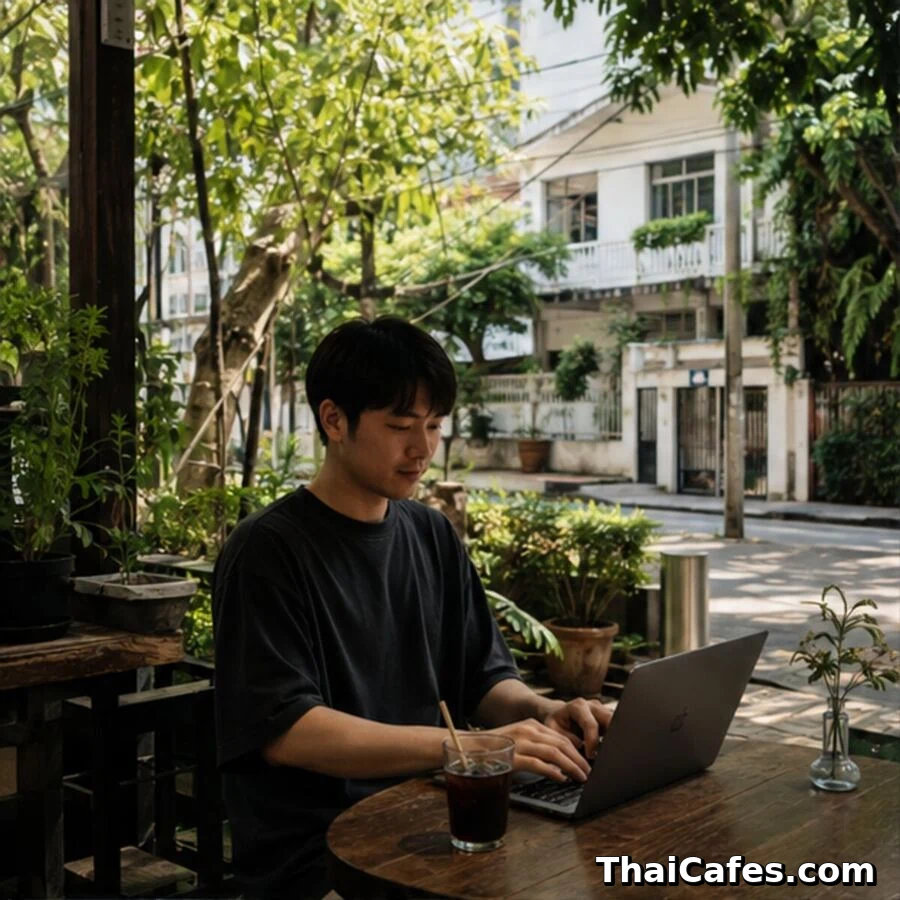
The café you enjoy on a Saturday is not always the place you want to work on Tuesday. A useful neighbourhood has ordinary-day conveniences: a second café when your first choice is full, lunch within reach, and a route home that you do not dread. Visit at the time you would normally work. That tells you much more than choosing a district because it appears in every Bangkok travel list.
Score each area against your real work. Deep Focus needs predictable quiet, comfortable seats and alternatives when a room fills. Calls & Meetings need conversational venues, coworking rooms and central access for clients. Stay & Work requires food, toilets and a venue that welcomes longer sessions. Quick Stop rewards direct station connections. Add rent, rail fares and last-mile transport only after scoring productivity. Saving money on accommodation is not a bargain if two transfers, a hot walk and a full café repeatedly consume the first hour of your working day.
Test before committing. Stay three to seven nights, work from two different cafés on weekdays, revisit one at lunch and make one evening journey home. Check phone signal inside the building, not on the pavement. Walk the station exit with a laptop bag. Notice construction, traffic, school pickup and weekend crowds. A neighbourhood changes across the day, and online reviews often describe leisure visits rather than four-hour work sessions. Your trial should answer whether the area supports a repeatable week, not whether it produced one enjoyable afternoon.
The Ari station page now includes NANA Ari, 34EIGHT and Lase Lase alongside earlier listings. Some cafés also sit within walking reach of Saphan Khwai or Sanam Pao, so compare those pages too. Use the Ari versus Saphan Khwai guide for a closer look at the overlap, or the Bangkok accommodation guide if you are choosing where to stay as well as where to work.
2. Ari and Saphan Khwai: the neighbourhood-café choice
Ari is one of Bangkok’s easiest neighbourhoods to understand on foot. The BTS station anchors a grid of sois with houses, small offices, restaurants and design-conscious cafés. It suits solo workers who like to alternate a focused morning with lunch and an afternoon change of scene. The best work seats are not always the most photographed rooms; small specialty bars may have limited tables or no laptop policy, while larger all-day venues can better support a two- or three-hour block. Keep a backup closer to the station because popular side streets fill quickly.
Saphan Khwai extends the same northern BTS corridor with a more local and often less polished rhythm. It can suit workers who value food, markets and residential convenience over an international lifestyle bubble. The two areas together form a practical two-station zone: live near one, work near the other and keep Chatuchak or Siam reachable without a transfer. The limitation is that many cafés sit inside narrow sois. Midday heat, uneven footpaths and motorbike traffic make a short map distance feel longer, so judge the door-to-door route rather than the pin.
Choose Ari–Saphan Khwai for Deep Focus, Casual Laptop and a neighbourhood routine, not because every venue welcomes calls. For important meetings, use a coworking room or travel directly to an interchange. Weekends can transform quiet cafés into brunch destinations, and weekday lunch can be busy around offices. A strong routine is an early focused block, lunch before the peak and a second venue only if the task changes. This area works best for people who enjoy leaving the station corridor rather than expecting every useful place to sit under a mall roof.

3. Asoke to Ekkamai: maximum choice, maximum friction
Asoke–Sukhumvit is the functional centre for people whose week crosses Bangkok. BTS and MRT connect here, offices and hotels create meeting venues, and malls provide rain-safe backups. It is excellent for Calls & Meetings, quick client handovers and flexible transport. It is weaker when you expect calm streets, low prices or an effortless seat. Traffic, tourists and office peaks create noise and competition. Treat Asoke as a mobility hub rather than assuming it must also be your deepest-work base. A coworking pass can be more predictable than café hopping on a deadline day.
Phrom Phong and Thong Lo offer premium residential services, international food and design-led cafés. They appeal to client-facing freelancers and creators who value atmosphere, but many good venues lie deep inside sois. Add the motorcycle taxi, walk or shuttle to your assessment. Some cafés optimise for dining and social visits rather than laptop stays. Verify policies and visit on a weekday before building a routine. If the budget works, the area provides strong lifestyle convenience; if every café order and last-mile ride feels expensive, productivity can become financially stressful.
Ekkamai balances the inner Sukhumvit lifestyle with slightly more room and access toward the eastern districts. It can support Casual Laptop and meeting days, with the bus terminal adding regional connections. Yet the same rule applies: station proximity and café quality vary by soi. A practical Sukhumvit strategy is to live where daily errands are easy, keep one station-connected backup and use different stops for different modes. Do not commute from Ekkamai to Ari merely because both appear central on a tourist map; direct lines and transfer count matter more than district fame.
4. Silom, Sathorn and Sam Yan: business-ready Bangkok
Silom and Sathorn are strong when remote work includes Bangkok companies, professional services or regular client meetings. BTS Sala Daeng and MRT Si Lom form a useful interchange, while Chong Nonsi and Saint Louis serve office corridors. Weekday cafés understand office rhythms, but lunch peaks are intense and some venues reduce weekend hours. The district supports Calls & Meetings and Quick Stop particularly well. For deep work, move away from the loudest road frontage or use a hotel lobby, library-like venue or coworking space with a predictable quiet zone.
Sam Yan adds a younger university and creative layer while retaining MRT access to Silom, Hua Lamphong and Sukhumvit. Mixed-use buildings and learning spaces can provide weather protection, food and longer opening hours. The trade-off is demand: student schedules, events and evening dining change the atmosphere. Sam Yan is useful for a mixed day—research, lunch, errands and a later meeting—rather than a guaranteed silent room. Check whether a venue has defined laptop seating, because open shared spaces may be comfortable but acoustically busy.
Lumphini Park gives this wider zone an important recovery advantage. A walk between work blocks can reduce screen fatigue without a long detour, and station access makes it possible to combine exercise with meetings. However, park proximity should not substitute for practical café criteria. Verify power, seats and policies first. Workers who enjoy a structured weekday, professional services and central transport often thrive here; workers seeking quiet lanes, low daily spending and late-night neighbourhood life may prefer Ari, On Nut or Huai Khwang.
5. On Nut, Phra Khanong, Rama 9 and Huai Khwang
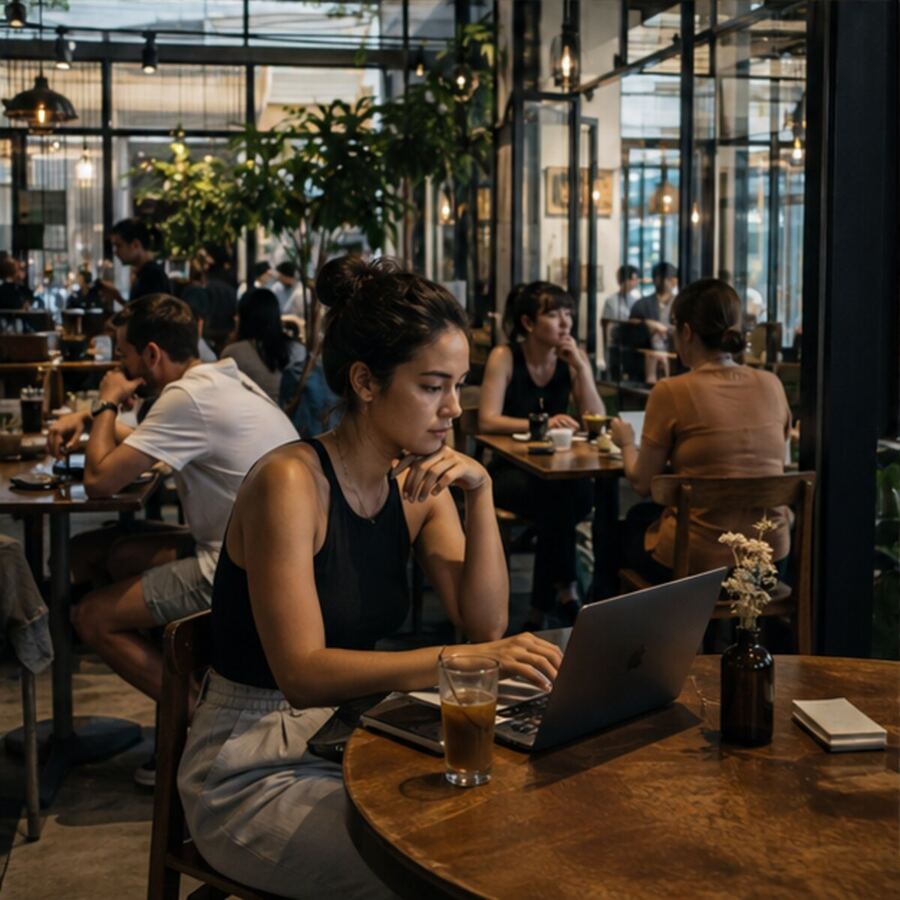
On Nut and Phra Khanong keep direct BTS access to central Sukhumvit while offering a more residential daily rhythm. Larger supermarkets, local food and a wider range of accommodation can make monthly life easier. Café quality is dispersed rather than concentrated in one photogenic lane, so save several options. These areas suit Stay & Work and Casual Laptop users who prefer value and routine. The cost is travel time: if every meeting is in Sathorn or Ari, direct BTS does not mean a short day. Calculate the whole week before trading central rent for longer journeys.
Rama 9 and Huai Khwang form an MRT-based alternative with offices, shopping, residential towers and food at varied hours. Rama 9 is stronger for structured business access and mixed-use backup venues. Huai Khwang feels more local and remains active later, which can suit asynchronous workers. Traffic and construction can affect last-mile walking, and some cafés prioritise dining or nightlife. Choose the exact exit and side of Ratchadaphisek Road carefully. A room that looks adjacent to the station can still require a long crossing or indirect pedestrian route.
Lat Phrao and newer line connections broaden the choice further for people whose life is north or east of the centre. Larger cafés and lower space pressure can support team work or longer stays, but transfers may erase the advantage for central meetings. These districts are not second-best; they are excellent when your weekly map fits them. A digital nomad teaching online to Asian time zones may value a quiet residential room and late food more than central nightlife. A consultant crossing the CBD daily may value the opposite.
6. Riverside, old town and a decision framework
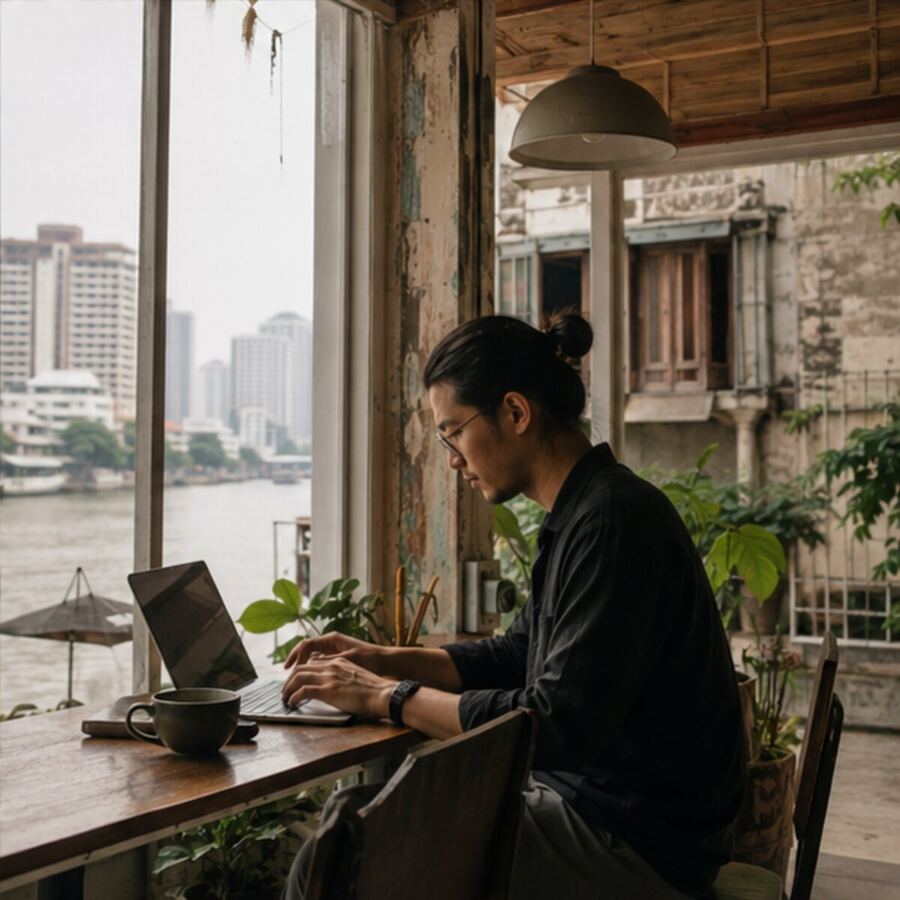
The riverside and old-town edge offer visual character, heritage, independent cafés and a slower sense of Bangkok. MRT Sanam Chai and the Blue Line extension improve access, while boats can be useful for selected routes. These areas inspire writers, designers and photographers, but they require more planning for calls, power and late return trips. Tourist peaks and temple schedules affect crowds. Use them for creative work and exploration days, then keep a more predictable backup near a station or hotel. Do not confuse an inspiring view with a complete work system.
Build a weighted scorecard with five categories: productivity fit, transport, monthly cost, daily services and personal energy. Give productivity double weight. Score two candidate areas after real visits, not from social media. Then write a sample Monday and Saturday for each: where you work, eat, exercise and handle a rainstorm. The exercise exposes hidden weaknesses such as no suitable morning café, an expensive last mile or weekend closures. A neighbourhood wins when ordinary days remain easy, not when its best café is exceptional.
A sensible first choice is reversible. Book a short stay near a useful line, create a three-café rotation and review it after two weeks. Track productive hours, orders, transport, failed sessions and how often you needed a backup. If the area works, extend. If not, move one corridor rather than trying to repair every inconvenience. Bangkok’s rail network allows digital nomads to test several lifestyles. Use that flexibility, and let your evidence—not a generic ‘best neighbourhood’ list—choose the place that supports your work.
Frequently asked questions
Frequently asked questions
Is Ari good for digital nomads?
Yes for neighbourhood cafés, food and direct BTS access, especially for solo focused work. Keep a backup for busy brunch periods and use a dedicated room for important calls.
Which Bangkok area is best for client meetings?
Asoke–Sukhumvit and Sala Daeng–Si Lom are strong because they combine BTS, MRT, offices, hotels and multiple backup venues.
Where is better value for a longer stay?
On Nut, Phra Khanong, Huai Khwang and selected Lat Phrao areas can offer better everyday value, provided your regular journeys remain simple.