
Where to stay in Bangkok when you work from cafés
Compare Asoke, Ari, Silom, Sathorn, On Nut, Phra Khanong, Rama 9, Huai Khwang, Chatuchak and the riverside by work, transport, budget and lifestyle.
Quick answer
Choose a base you can comfortably use on an ordinary weekday. Check the walk to the train, two usable cafés, everyday food and your most frequent appointments. A short stay in the neighbourhood can reveal more than a long list of facilities on a booking page.
Choose a base before a long booking
| Your situation | Start with | Check before choosing |
|---|---|---|
| Changing routes and many appointments | Asok / Sukhumvit | Transfer walk and actual room noise |
| A routine around local cafés | Ari / Saphan Khwai | Two usable work venues, meals and train walk |
| Frequent business-district visits | Silom / Sathorn | Commute to your specific appointments |
| Unsure about daily life | Short trial stay first | Walk the route with your work bag |
Use this as a decision aid. Check the exact café, route and current terms before committing; examples are not live prices or reservations.
1. Choose a weekly operating base, not a holiday address
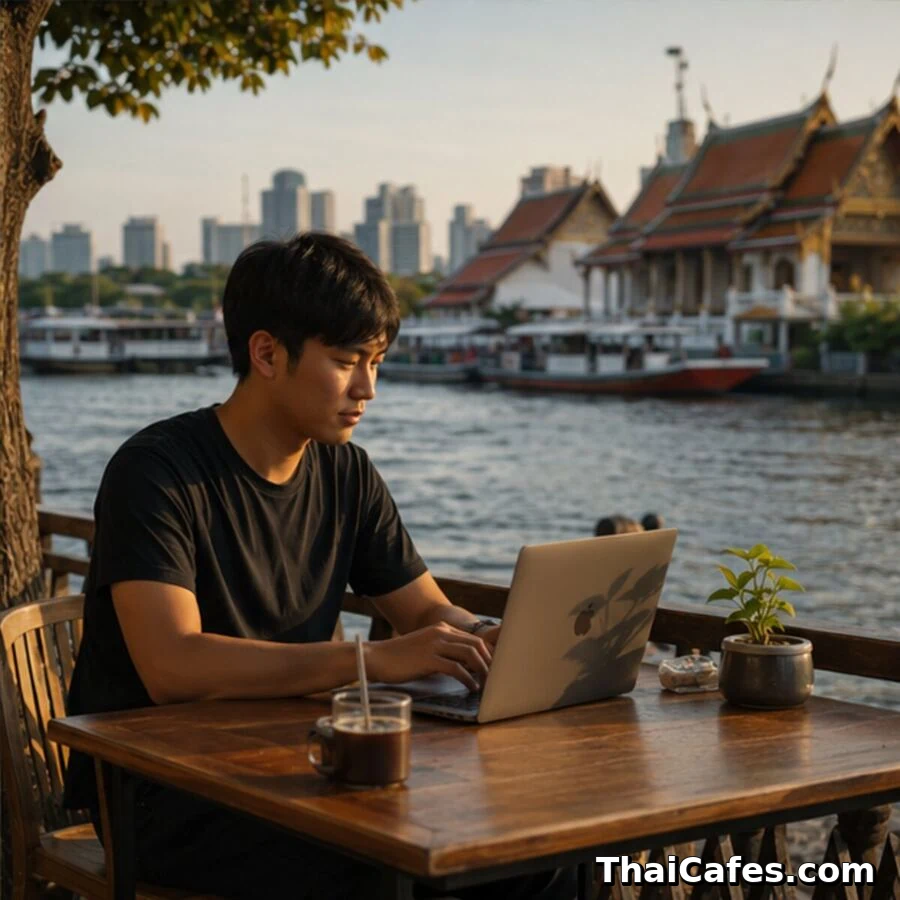
A hotel can look close to the station and still leave you with an awkward daily walk. Before choosing a longer stay, try the route at the time you normally leave with your laptop. Find somewhere for an ordinary lunch, not just a special dinner. Check whether you have a second place to work when your favourite café closes for a day. These small routines shape a working week more than a rooftop photograph does.
Compare door-to-door time. Include the walk from room to station, platform access, interchange passages, the correct exit and the final walk to a café. Bangkok heat and rain change the meaning of 800 metres. An apartment advertised as five minutes from BTS may be five motorcycle-taxi minutes, while another has a sheltered path. Visit at midday and after dark with a bag. Check lifts, stairs, crossings, lighting, construction and whether the lobby or street floods after rain.
Define housing workability. A good bed and location do not guarantee a usable office. Check desk height, chair, daylight, blackout, air-conditioning, sockets, noise, mobile signal and internet support. Ask for a speed test but verify after arrival. Find out whether the building has a lobby workspace, backup power or rules on calls and guests. A room that supports two focused mornings per week can reduce café and coworking spending enough to justify slightly higher rent.
Compare the Ari and Saphan Khwai station pages when looking north of the centre, or BTS Asok and MRT Sukhumvit for an interchange base. Open the individual café pages before assuming a district has the facilities you need. The Bangkok neighbourhood guide compares working areas, while the café budget guide helps estimate what your chosen routine might cost.
2. Asoke, Phrom Phong and central Sukhumvit
Asoke–Sukhumvit offers the strongest flexibility for a first stay. BTS and MRT intersect, airport and business trips are manageable, and malls, hotels, coworking spaces and cafés create backups. It suits client meetings and people still discovering their weekly map. The costs are traffic, crowding, nightlife noise and generally higher housing and café prices. Choose the exact soi carefully. A room facing a late venue or major road can undermine sleep, while a slightly deeper lane may add an uncomfortable last mile.
Phrom Phong and Thong Lo add premium services, international dining, fitness and polished cafés. They suit professionals with client-facing work and a larger budget. Many destinations sit inside sois, so include shuttle, motorcycle taxi or walking time. Verify laptop policies because design-led cafés may prioritise dining and social visits. Living beside the line does not mean every useful place is beside the station. The best setup is often a home desk plus one dependable local café and a station-connected meeting backup.
Ekkamai and Phra Khanong gradually shift toward a more residential balance while keeping direct BTS access. They can offer more space and lower rent than inner Sukhumvit, though new buildings and premium pockets still vary. Ekkamai helps eastern road connections; Phra Khanong supports everyday food and mixed residential life. Count the ride to your frequent destination. If you travel to Asoke daily, the direct line is simple. If every week includes Ari, Silom and western Bangkok, an interchange base may still save time.
3. Ari, Saphan Khwai and the north
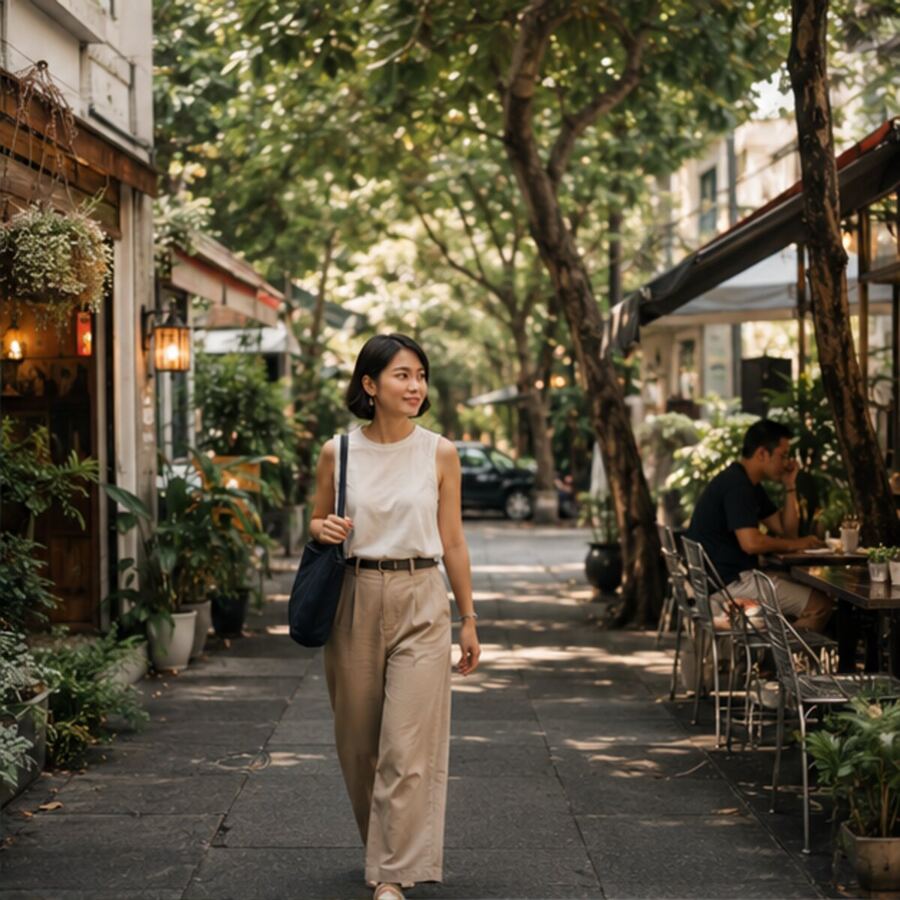
Ari is attractive for independent workers because home, cafés, food and small services can form a walkable routine. The atmosphere is calmer than central Sukhumvit while BTS keeps Siam and Asoke accessible without a transfer. It is strong for writing, design and solo work. The trade-offs are popular brunch crowds, deep-soi walking and a rental market that is not always cheap. Test weekdays and weekends. Save a less fashionable backup because the most photographed café may be the least dependable office.
Saphan Khwai offers a more local extension with markets, food and access to Chatuchak. It may provide better value while staying one stop from Ari. Chatuchak–Mo Chit connects BTS, MRT, parks, the northern transport corridor and weekend activity. This wider area suits people whose work or travel reaches north Bangkok. Weekend market traffic and large-road crossings can complicate a café day. Choose the correct station pair and exit rather than treating every nearby pin as equivalent.
Lat Phrao broadens the northern option through MRT and newer line connections. Larger apartments, malls and cafés can support longer stays, while food and residential services are extensive. The district is large; ‘Lat Phrao’ on an address does not prove station convenience. Plot the exact building and likely café. A home several kilometres from the rail line creates daily last-mile cost. This zone works best when your regular destinations also sit north or east, not when every appointment requires central Sukhumvit.
4. Silom, Sathorn, Rama 9 and Huai Khwang
Silom and Sathorn suit digital nomads whose remote work includes Bangkok businesses. Sala Daeng–Si Lom provides BTS–MRT flexibility, Chong Nonsi and Saint Louis reach office areas, and Lumphini Park offers recovery space. Weekday services are excellent; lunch peaks and weekend closures vary. Housing ranges from older apartments to premium towers. Check noise from roads and construction. This area is less about a nomad bubble and more about efficient professional access.
Rama 9 is a practical MRT commercial node with offices, malls and residential towers. It supports meetings, errands and weather-proof backups. Huai Khwang shifts toward local residential life, food at varied hours and potentially better value. Both are useful for people working asynchronous schedules, but road traffic and construction affect street experience. Inspect the exact side of Ratchadaphisek Road and station exit. A tower visible from the station may require an indirect crossing.
Choose between these corridors by client map and desired rhythm. Silom–Sathorn brings CBD proximity and daytime professionalism. Rama 9–Huai Khwang brings MRT continuity, residential convenience and later activity. Test a return journey after your normal work end, not only at midday. If calls align with Europe or North America, late food and building access matter. If mornings begin with Thai clients, shorter CBD travel may be more valuable.
5. Riverside and old town: lifestyle with extra planning
Riverside and old-town living can be inspiring: heritage streets, independent venues, markets, temples and water views create a distinctive Bangkok routine. MRT Sanam Chai and the Blue Line extension improve access, while boats are useful on selected routes. This area suits writers, photographers and people who value place over maximum central efficiency. It is less forgiving for frequent cross-city meetings, confidential calls or late returns without a clear transport plan.
Check building infrastructure carefully. Charming older properties may have stairs, variable sound insulation, limited desk space or inconsistent internet support. Newer river towers may be comfortable but isolated from everyday cafés without a shuttle or boat. Test mobile signal indoors and the last service you rely on. Tourist and temple schedules create changing crowds. The beautiful morning street may become hot and congested by noon, so plan work and exploration as separate modes.
A balanced strategy is to use the area as a home and creative base while scheduling important meetings near a rail interchange. Keep one verified local café, one hotel or coworking backup and offline work for transport disruptions. If the atmosphere improves your work and the extra travel is occasional, the trade can be worthwhile. If every day requires two last-mile legs, the view may become an operational tax. Track a sample week before signing longer.
6. A seven-day test before a long stay
Book a refundable week or short serviced stay. On day one, test the room desk, internet, water, air-conditioning and night noise. On day two, commute to your likely meeting area. Work from a neighbourhood café on a weekday morning and revisit at lunch. Buy groceries, use laundry, exercise and return after dark. On a rain day, test the sheltered route. This produces more useful evidence than dozens of apartment photographs and generic area guides.
Score five categories: workability, transport, daily services, monthly cost and personal energy. Give workability double weight. Add hidden costs such as motorcycle taxis, delivery, coworking days and time lost to transfers. Note sleep quality and whether the street encourages useful walking. A district can be objectively connected yet personally exhausting. The purpose is not to find Bangkok’s universally best area; it is to identify the place where your ordinary week consumes the least unnecessary energy.
Build a three-location work rotation before extending: one near-home focus place, one station-connected meeting place and one dependable fallback. Confirm current hours and policies. If the neighbourhood supports those three roles and the room remains comfortable, extend. If one category repeatedly fails, move along the same line or toward an interchange rather than trying to repair every inconvenience with ride-hailing. Bangkok rewards reversible decisions because the rail network lets you test several corridors.
Frequently asked questions
Frequently asked questions
What is the easiest Bangkok area for a first-time digital nomad?
Asoke–Sukhumvit is highly flexible because BTS and MRT intersect and backup workspaces are abundant, though it is busy and relatively expensive.
Where is calmer but still connected?
Ari is a popular BTS option; selected Sathorn lanes, On Nut, Phra Khanong and Huai Khwang can also work depending on your weekly map.
Should I sign a long lease immediately?
Test the exact room, street, rail route and work cafés for at least several days first. A reversible short stay is valuable research.